Tuesday, December 8, 2015

Adding Projects to LinkedIn

In order to showcase my social media blog and Bailey's Facebook campaign, I am able to include them in my Projects section of my profile. Here is how to do it.

Under your LinkedIn home page, go to Edit Profile and scroll down until you reach Projects.


Once there, you are able to add the project name, months in process, your occupation used to execute the project, it's URL link, and a brief description.


After you are done, click Save.


You are now ready to show the employers any projects you'd like to showcase!


Thursday, December 3, 2015

LinkedIn URL

This week in class, the students were to change their LinkedIn profiles URL. By doing this, it will enhance your personal brand.

To change your LinkedIn URL, you must log into your profile and click on the edit profile tab. Once there, you will see your profiles website name. Scrolling over it will reveal a settings key. By clicking on that, it will take you to another editing page for your profile.


On the top right corner will be an option to change your public profile URL. Clicking on the pencil tab, you are able to type in a new name.


Final Project Rough Draft

This week, our professor wanted the students to create a rough draft Powerpoint for our Facebook Ad Campaign. In this Powerpoint, I explained my Project Proposal, Facebook Advertisement, Results, Demographics, and a Conclusion slide.

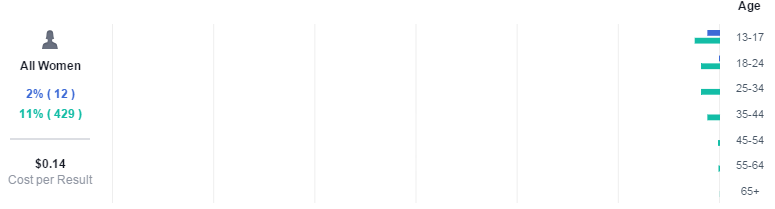
In the Project Proposal, I explained through bullet points that Bailey is a 10 year old Shiba Inu and that I would expose her through social media. I revealed the dates it ran, as well as the 3 phases. Phase 1: Create a Facebook Ad Campaign. Phase 2: Put Advertisement into motion. Phase 3: Review results of campaign. The last bullet point included the $20 budget. On the Facebook Advertisement slide, I posted the screenshot of the audience definition. In bullet points I listed the Target Market, Potential Reach, the Budget (once again), as well as the start date. The Results slide only showed People reached and Cost per click along with screenshots. On the Demographics slide, I applied screenshots of the ages of all men and women. Women cost $0.14 per click while men cost only $0.03 per click. I commented on how 80% of the likes were from young teenage males, which surprised me. The last slide is the Conclusion. Here I mentioned what my original goals were before I ran the campaign and how the results exceeded my goals.


Tuesday, November 24, 2015

Facebook Ad Campaign for Social Media Marketing Project

Our class was to make a Facebook campaign for our final presentation. I decided to create a campaign on gaining page likes for my dog Bailey.
       
Earlier in the course, we were required to make a Facebook page just to get an idea of how to do it. I made one for my dog. When this project came about I thought to myself, "Well, she's a real pet and her page is already set up. So I guess I can advertise her and see what kind of people would be interested in clicking on her." We weren't required to actually put money into the campaign, but it was recommended. I put $20 towards a 3 day campaign (11/18-11/20) to gain likes for Bailey's page. I assumed she would have reached about 6,000 people, accumulated 80 clicks, and accumulated at lease 20 likes.

Here are the results:
Results on graph


Ages of audience 
Ad placement
I was presently surprised on many likes Bailey's page got. She accumulated 739 new page likes and reach a little over 7,000 people! That was much greater than what I projected before the campaign ran. I found it interesting that 80% of the total likes gained were from males between the ages of 13-17. I'd expected to attract mostly females and a little bit of an older age group. Either way, I'd say the campaign was pretty successful. 


Ch. 11

In this chapter, Bolles explains how to start your own business.

So what if you can't find a job that suits you? Maybe you just don't want to work for someone else. Well, why not start a business? "According to some surveys, up to 80% of all workers have toyed with this idea at some point in their lives." Some examples of dreams that people may have are opening their own bake shop, selling jewelry,  or even creating their own website where they can teach people how to "go green." You might not even have any ideas yet, but you just know that you want to be your own boss and are open to suggestions.

By giving 3 case histories, Bolles makes his point on how starting a business can be fairly easy or very difficult. After reading them, he points out what things they all have in common:

a.) The individuals didn't need a ton of money to start up.
b.) The individuals had to do a lot of research in order to be successful.
c.) The individuals all used the Internet as s key tool in helping them expose their product, service, or expertise to the public.
d.) None of the individuals went down the traditional path that most would think to do.


If you are unsure what kind of business to launch, you should follow the 4 steps to see what you might do.

Write: Start with reading Chapter 7 again, which is understand who you truly are. It is a good idea to get out a blank sheet of paper and write down any ideas you may come up with. Then, you can write your resume along with the guidance of Chapter 2 on how to write your resume.

Read: By now, hopefully you have 3 different business ventures thought up. Bolles provides multiple websites to take a peek at regarding "all the virtues and perils running your own business." Websites like Working Solo, Small Business Administration, and A Small Business Expert, just to name a few.

Explore: With your business in mind, "you must find out what skills, knowledge, or experience it takes to make this kind of business idea work, by interviewing several business owners." This is known as List A. Then you need to make a list of skills, knowledge, or experience that you have. This is known as List B. By subtracting List B from A, you get what skills, knowledge, or experience you are missing, which is List C. List C is names of friends or co workers that do have these skills that you lack that might be able to help with your business.

Get Feedback: Are you cut out for creating your own business? You can find out on Working Solo. This is link is a self-examination type questionnaire that you can fill out which "encourages you to ask the hard questions."

Thursday, November 19, 2015

Ch. 10

In this chapter, Bolles talks about five different ways to choose or change your career.

1.) The first way to go about changing your path is to go online and look at O*Net Online, which is something Bolles mentioned in a previous chapter. On the home page, you will find multiple links that either have you take a career quiz, find job openings, or see what's offered for driving and work from your home jobs. This can be a useful tool whether you are still unsure about your new career choice or you know exactly what you are looking for. I think it's a great website to take advantage of.

2.) The next way mentions career tests. They can be very useful to some people, and not so useful to others. The tests can only be so broad, so they might not be right for you because you are unique and there is no other person just like you. Bolles words it that taking the test "can only describe the family in which you belong." Apparently that's just not enough when picking a career you love! When taking a test, be open minded and don't try to come up with the end result it might give you. Taking several tests can help as well. You might get "mixed reviews" from each test taken, so Bolles provides testing websites like The Dewey Color System, Dr. John Holland's Self-Directed Search, and The University of Missouri' Career Interests Game
The Dewey Color System test
3.) Using your Flower Diagram he suggested to make in Chapter 7. This Chapter tells us how to use it to "breakdown and build it up to define a career for you."

4.) You can change a career in two steps. Bolles mentions that we must consider the job title vs. the field in which it's in. "Title is really a symbol for what you do. Field is where you do it, or what you do it with." He provides a diagram to show how there is 3 ways to change careers. One way that he names "the Difficult Path" is jumping right into that line of work that you want to do. For example, if an Accountant suddenly decides he wants to become a reporter on new medical developments, you have to ease into it. Look into being an accountant at a Hospital for medicine research or see how you can get involved with television that leads to reporting. 

5.) Last but not least, you should look into what the job market needs these days. See what's in demand or what is projected to be rising in demand. Going to the U.S. Bureau of Labor Statistics and browse around on the site. It would be best to look at the level of education needed for certain jobs that are growing faster-than-average.  
Guide to career information on the T.S. Bureau of Labor Statistics


Monday, November 16, 2015

Ch. 9

This Chapter talks about how to handle your handicaps or anything else that is holding you down from a job.

When you go to a job interview, you could think of hundreds of ways that you could get turned down. "I never graduated high school/college. I am too fat, ugly, etc. I am Black, Hispanic, etc. I am too shy. I haven't had enough experience." These are just some of statements that people come up with when walking into an interview. Bolles says that yes, a handicap might keep some employers from hiring you, but not all; we cannot generalize all employers. But we can divide employers into 2 tribes, "employers who are interested in hiring you for what you can do; vs. employers who are bothered by what you can't do." For the ones who seem to focus more on what you can't do, respectfully decline their offer and ask if there are other employers who would be interested in your skills. It's okay if it takes a long time to find a job you'd really love and feel respected by the employer.

Everyone is handicapped in their own way, so it's best to not only focus on what you can't do. 
Bolles suggests to get a piece of paper and write a list (side by side) of skills you have and don't have.  He has a list of 246 skills as verbs list on the next page if you are having trouble getting the list long. Once you're done, he says to pick out 5 skills that you like and write examples of how you've done them recently.

Disabilities and prejudices are 2 very different things. "A disability is something wrong with you. A prejudice is something within the employer." But both are considered handicaps because both can prevent you from being hired. Some examples of prejudices are being out of work too long, age, returning veterans, ex-offenders, former patient, and others.